
Models of grief can help make confusing and painful times easier to understand. They show you that feelings like sadness, anger, or numbness are a normal part of grief and give you words to express these feelings. These models also help others understand what you are going through so they can support you better. While grief is different for everyone, these guides can make it feel less confusing.
This month we are sharing the Dual Process Model of Grief, a helpful way to understand the natural grieving process that follows a bereavement. This model explains how grief can be experienced and that shifting between loss and restoration is a normal and healthy response to loss.
The Dual Process Model of Grief, developed by researchers Margaret Stroebe and Henk Schut, helps to explain that grieving doesn’t follow a straight line, but that emotions may shift from day-to-day, or even hour-to-hour.
The model describes two types of experiences people might go through after somebody has died:
- Loss-oriented coping – These are the times when you focus more on your loss. This may include crying, talking about the person who died, feeling sadness, or reflecting on memories.
- Restoration-oriented coping – Times when you look more at rebuilding life and adapting to changes. This might mean handling everyday tasks, trying out new hobbies, or just finding little ways to take your mind off things and feel a bit better.
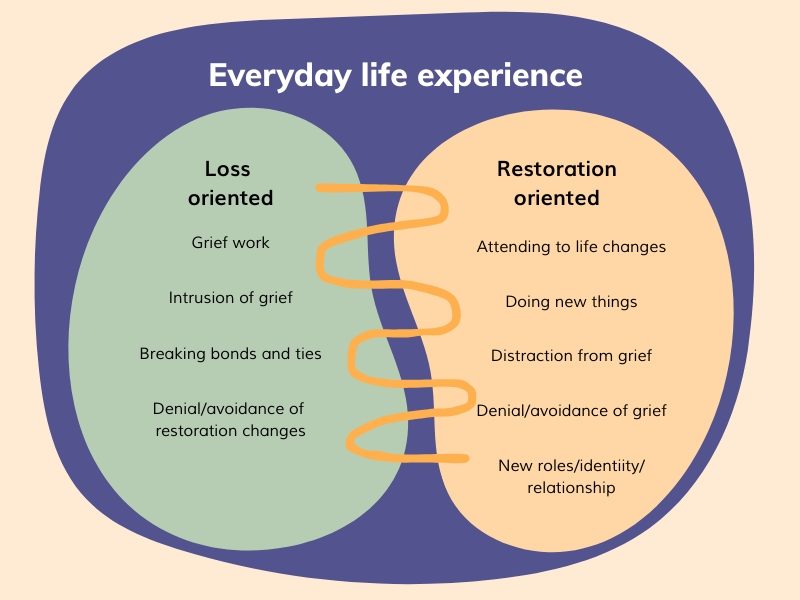
Rather than moving through fixed stages, healthy grieving involves moving back-and-forth between these two ways of coping. Some days, the feelings of loss are front and centre, on others, the focus is on daily life and ways to move forward. Both are essential for healing.
Feeling joy or laughter doesn’t mean you’ve forgotten the person who has died, and feeling intense sadness months or years later doesn’t mean you’re back at square one. Switching between emotions and activities is part of the natural rhythm of grief.
Remember your path through grief is individual to you but is not one you must go through alone. We offer one-to-one and group counselling, together with numerous Peer Support Groups and Activity Groups. For more information regarding bereavement support, you can contact the Bereavement Office at the Hospice, either by emailing bereavement@stmichaelshospice.com (opens in a new tab) or by calling the office on 01424 456361.
Related articles


Get hospice news and updates
Stories, events and news from St Michael’s Hospice delivered to your inbox.

Contact us
We’re here to help. Contact us by phone, email or post, or send us a message. For appointments or care-related enquiries, please call us.